BEHIND THE ALARM
Straight Talk from the Fire Service
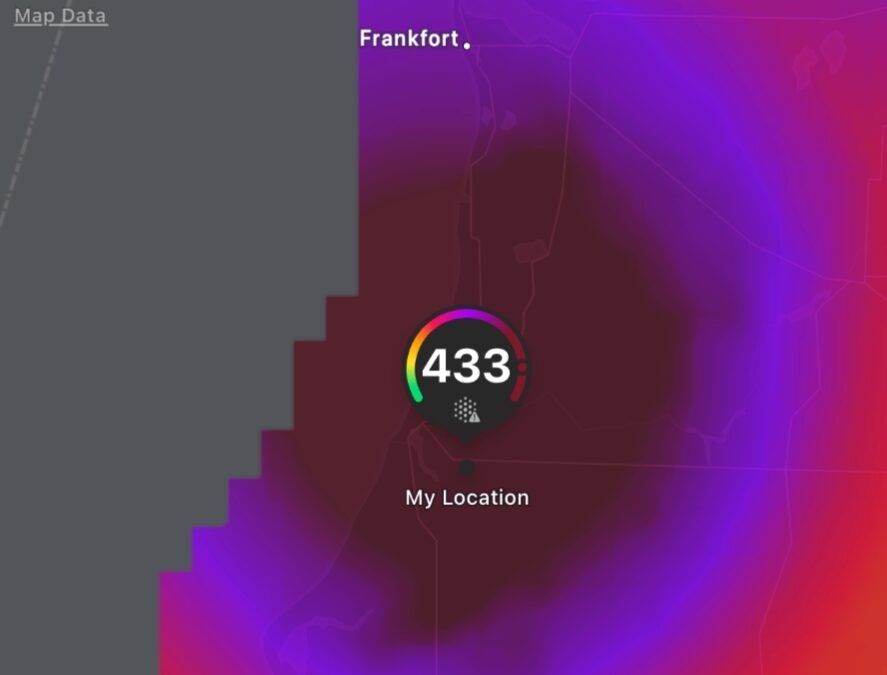
Fifty years on the fireground teaches your nose things. When I walked outside yesterday and this morning, I didn’t need an app to tell me what I was breathing. It smells exactly like the perimeter of a working fire or a wildfire— the air on the edge of the scene, after the knockdown, when the smoke has thinned but hasn’t cleared. I’ve stood in that air more times than I can count. The difference is that when I stood in it, I had training, monitoring, and most of the time a way to get out of it. Right now the whole state is standing in a version of it, and a lot of people don’t recognize what they’re breathing.
What’s actually in wildfire smoke
Firefighters have spent the last two decades learning — the hard way, through our own cancer and cardiac numbers — that smoke is not just “burned stuff in the air.” It’s a chemical soup. Wildfire smoke carries carbon monoxide, volatile organic compounds, and a whole family of combustion products, but the piece that drives the health alerts is fine particulate matter: PM2.5.
PM2.5 is particulate under 2.5 microns — small enough that your upper airway can’t catch it. It rides straight down into the deep lung and crosses into the bloodstream. That’s the same reason we preach SCBA discipline on overhaul: the stuff that gets you isn’t always the thick black smoke you can see, it’s the fine invisible fraction that lingers after. Wildfire smoke is that fine fraction, spread out over an entire state, with no pack for the public to put on.
Why the fire service treats this differently
On the job, we don’t judge smoke by how it looks — we judge it by what it does. A thin gray haze on a fire scene will still load your lungs if you stand in it long enough without protection. We’ve buried too many brothers and sisters to pretend otherwise. That’s the mindset I want the public to borrow this week: stop rating the danger by the color of the sky. Rate it by the number and by the dose — how much you breathe and for how long.
Dose is the whole game. A person sitting quietly indoors and a person running the same air are getting wildly different exposures, because exertion multiplies how much air moves through your lungs. On the fireground we manage that with work-rest cycles and air management. At home this week, you manage it by not turning a bad-air day into a hard-work day.
The playbook: treat it like an exposure event
Inside — build a clean-air zone:
● Close it up. Windows and doors shut. Set your AC or furnace fan to recirculate so it isn’t pulling smoke in from outside.
● Run a HEPA air purifier if you’ve got one. A closed room with a HEPA unit is the closest thing to clean-air staging most families have. No purifier? A box fan with a MERV-13 furnace filter taped to the intake side is a legitimate field-expedient version — we improvise on scene, and this is the same idea.
● Kill your indoor sources: no candles, no gas stove or heavy frying, no vacuuming without HEPA, no wood stove. You’re trying to keep particulate out, not add your own.
● Watch the vulnerable ones — anybody with COPD, asthma, heart disease, the very young, the very old. They decompensate first.
Outside — if you have to be in it:
● Check the real AQI before you go: MiAir, AirNow, or your weather app. Treat it like a size-up. You wouldn’t make entry without knowing conditions; don’t send yourself out blind either.
● Right respirator or nothing. A properly fitted N95 or better stops PM2.5. A bandanna, a surgical mask, or a cloth mask does not — those are the wrong PPE for this hazard, same as a dust mask is the wrong PPE for an IDLH atmosphere.
● Keep the work light and short. Save the mowing, the woodpile, the long run for after the rain.
● Know your own warning signs and act on them: tight chest, hard breathing, a cough that won’t quit, burning throat — that’s your low-air alarm. Get to clean air. Chest pain or real shortness of breath is a 911 call. Don’t tough out a cardiac event because you didn’t want to look soft.
A word to the crews and the coaches
If you run an outdoor operation this week — a fire department drilling, a road crew, a landscaping outfit, a youth sports program — this is a command decision, not a vibe. Set a trigger number before you start: what AQI shuts it down. Build in work-rest and hydration, because this smoke is landing on top of near-90-degree heat in a lot of the state, and heat plus particulate is a double load on the heart and lungs. If you’re a chief, a foreman, or a coach and you don’t have a threshold written down, you’re gambling with somebody else’s lungs. We know better than that.
How long are we in this?
Until the weather breaks it. The pattern feeding us smoke is a northwest flow carrying plumes down across the Great Lakes. The forecast has relief coming when the wind turns southerly, and a rain system moves through — two rounds of showers and storms, with morning storms in the cards for our part of northwest Lower Michigan. Rain washes particulates out; the wind shift stops feeding it in. So your instinct is right: this holds until we get a change of wind direction or a good soaking rain. Between now and then, take every day on its own AQI reading. The plumes move, the number swings, and one clear hour is not the all-clear.
Bottom line: You’re breathing the perimeter of a wildfire right now, whether it looks like it or not. Treat it the way we treat smoke on the job — respect the invisible fraction, manage your dose, wear the right PPE, and get the vulnerable people into clean air. This too will pass with the wind and the rain. Until it does, stay sharp and stay in.
Author’s note: Every claim sourced. Corrections with sources welcome and will be published.
Sources: EGLE statewide Air Quality Alert, July 2026; MDHHS wildfire smoke and health guidance; U.S. EPA Air Quality Index / AirNow; NWS regional forecast discussions; EPA and fire-service guidance on DIY box-fan filters and N95 respirator use for PM2.5.
Fred R. LaPoint, Fire Chief · Behind The Alarm
This article first appeared in Behind The Alarm, the newsletter of Fred R. LaPoint, Fire Chief Paramedic of the Stronach Township Fire Department, on July 16, 2026. Read the original.