Behind The Alarm – A Journey Through Firefighting History
Welcome to this week’s edition of Behind the Alarm. Firefighting is more than just a job—it’s a calling, a passion, and a commitment to serve our communities. Yet, for many, what we do remains a mystery, often clouded by misconceptions or dramatized by Hollywood. This blog aims to pull back the curtain and offer a candid, behind-the-scenes look at the craft of firefighting. Whether you’re curious about the training we undergo, the challenges we face, or the teamwork that makes it all possible, you’ll find it here. Each week, we’ll explore a different facet of firefighting, from the adrenaline-filled moments when the alarm sounds to the quieter realities of life as a firefighter, whether career or volunteer. Our goal is to bridge the gap between the firehouse and the community, helping you understand the complexities, dangers, and triumphs of this work we love. So, let’s start the journey together—because what happens behind the alarm deserves to be shared.
Behind The Alarm: A Journey Through Firefighting History in the United States
Firefighting in the United States has evolved remarkably from its early days of bucket brigades to the sophisticated fire departments we see today. This journey through history highlights the significant milestones and traditions that have shaped the fire service.
The Birth of Organized Firefighting
In 1736, Benjamin Franklin recognized the need for organized fire protection and co-founded the Union Fire Company in Philadelphia, marking the inception of volunteer firefighting in America. Franklin’s initiative set the foundation for community-based fire response, emphasizing the importance of preparedness and collective effort.
Early Firefighting Techniques
Initially, firefighting relied heavily on manual methods. Bucket brigades, where lines of volunteers passed buckets of water hand-to-hand, were common. As urban areas expanded, the limitations of such methods became apparent, leading to innovations in equipment and strategies.
Evolution of Water Supply: From Fire Plugs to Hydrants
Early American cities utilized hollowed-out logs as water mains, buried beneath streets to prevent freezing. During fires, firefighters would dig down to these wooden pipes and bore holes to access water, creating a makeshift well. After extinguishing the fire, they sealed the hole with a wooden plug, known as a “fire plug.” These plugs were often marked for future use by staking a marker alongside the street at that location, allowing quicker access in subsequent emergencies. This practice laid the groundwork for modern fire hydrants, which eventually replaced the rudimentary system with cast-iron pipes and above-ground hydrants, streamlining water access during emergencies.
Transition from Manpower to Horsepower
As cities grew, the demand for faster response times led to the adoption of horse-drawn fire apparatus in the mid-19th century. This transition brought about significant changes in firehouse operations and culture.
Introduction of Fire Horses
The era of the fire horse spanned approximately 60 years, from around 1860 to 1920. Fire departments invested considerable time and resources in selecting and training horses suitable for the rigorous demands of firefighting. Horses were classified based on the equipment they pulled:
• Lightweight (1,100 pounds): Assigned to hose wagons.
• Middleweight (1,400 pounds): Tasked with pulling steamers.
• Heavyweight (1,700 pounds): Used for hook and ladder trucks and other heavy apparatus.
Firehouse Design and Operations
Fire stations were meticulously designed to accommodate horses and ensure rapid deployment during emergencies. Key features included:
• Stall Orientation: Stalls faced the street, allowing horses to be quickly hitched to apparatus. In some stations, horses could enter stalls from either end, facilitating efficient movement.
• Feed Systems: Feed, typically oats and hay, was stored in upper levels of the station. Chutes or openings in the ceiling allowed firefighters to drop food directly into the stalls, streamlining feeding routines.
• Harnessing Mechanisms: Harnesses and hardware were suspended from the ceiling on pulleys. When an alarm sounded, stall doors—often electrically operated—would swing open, and the well-trained horses would position themselves in front of their designated equipment. The harnesses were then swiftly lowered onto the horses, enabling crews to depart within minutes.
Training and Intelligence of Fire Horses
Fire horses underwent extensive training to familiarize them with the routines and demands of firefighting. Their intelligence and ability to learn were remarkable:
• Response Drills: Horses were trained to respond to alarms by moving promptly to their positions, minimizing the time between alarm and departure.
• Unassisted Returns: After a call, some horses could navigate back to the station without guidance, demonstrating an impressive understanding of their routes and responsibilities.
• Post-Service Roles: Due to their training and reliability, retired fire horses were highly sought after by delivery services. Milkmen, for instance, valued these horses for their ability to learn delivery routes, allowing the driver to make deliveries while the horse proceeded to the next stop. However, there were instances where these horses, upon hearing fire alarms, would instinctively head toward the commotion, recalling their firefighting days.
The Manistee Fire Department Experience
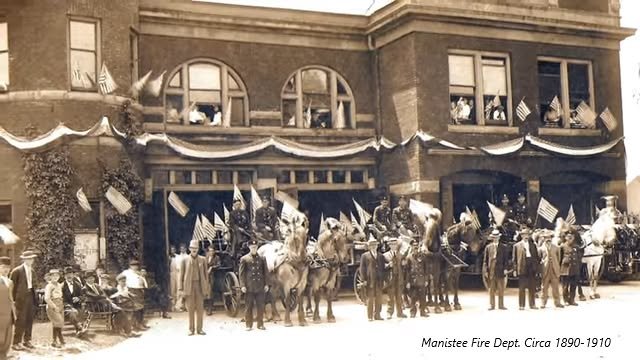
The Manistee Fire Station, built in October of 1888 and opening July 22,1889, offers a vivid example of the horse-powered era. Historical accounts from retired firefighters highlight:
• In-House Blacksmithing: The department maintained its own blacksmith shop, enabling firefighters to perform shoeing and attend to minor veterinary needs, ensuring the horses remained in peak condition.
• Automated Stall Doors: The station featured electrically operated stall doors that opened upon alarm activation, allowing horses to swiftly move into position.
• Aerial Ladder Deployment: In addition to steam engines and hose wagons, horses were trained to pull aerial ladders, essential for reaching elevated fires.
The Mechanics of Steam Fire Engines
Steam fire engines revolutionized firefighting by providing a consistent and powerful water stream. These engines operated by burning fuel to heat water in a boiler, producing steam. This steam powered pistons that pumped water at high pressures through hoses onto fires. The efficiency and reliability of steam engines marked a significant leap in firefighting capabilities, allowing for more effective suppression of larger blazes.
Modern Advancements
Today, firefighting has advanced far beyond its humble beginnings. Modern departments are equipped with state-of-the-art technology, including motorized fire engines, advanced protective gear, and sophisticated communication systems. Despite these advancements, the core values of bravery, community service, and teamwork remain steadfast.
Understanding the rich history of firefighting not only honors the legacy of those who served before but also highlights the progress made in protecting communities from the ever-present threat of fire.
Thank you for reading this week’s installment of Behind The Alarm! Check back next week as we tackle another topic from behind the alarm. Have questions or suggestions? We’d love to hear from you
!
This article first appeared in Behind The Alarm, the newsletter of Fred R. LaPoint, Fire Chief Paramedic of the Stronach Township Fire Department, on February 16, 2025. Read the original.