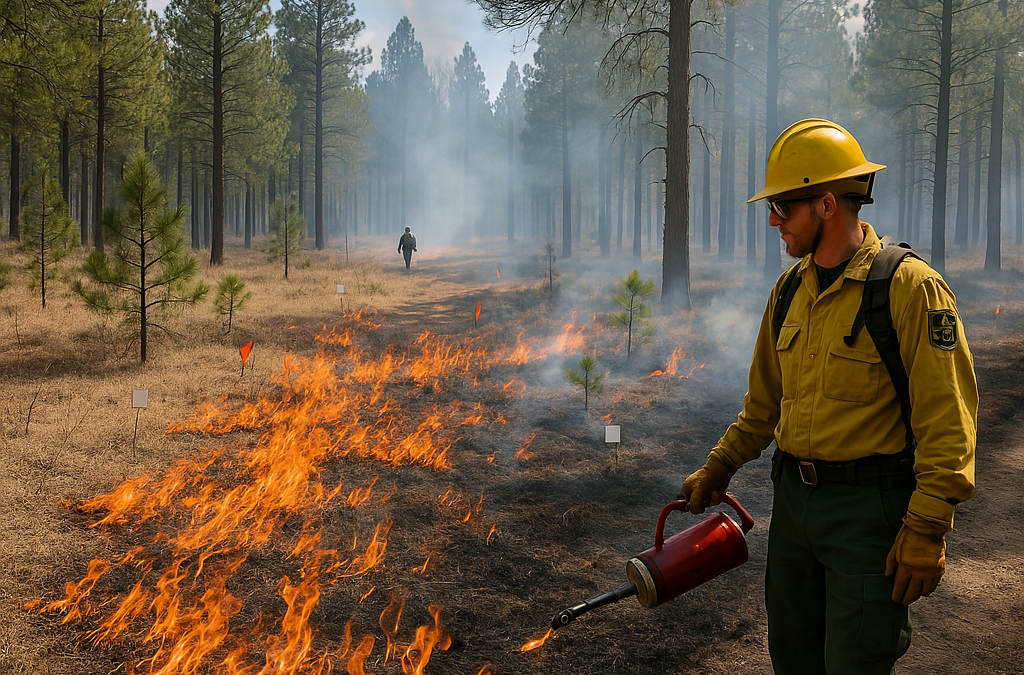
These past few weeks in Stronach Township, the U.S. Forest Service conducted a series of prescribed burns—planned fires intentionally set under controlled conditions. And like clockwork, the smoke brought complaints. I heard from concerned residents worried that they’re “destroying” our national forest.
Let me be clear: what’s happening out there isn’t destruction. It’s protection. It’s preservation. It’s science.
Prescribed fire, sometimes called “controlled burning,” is one of the most effective tools we have in the fire service to prevent larger, catastrophic wildfires. But it’s also one of the most misunderstood.
What Firefighters See in Smoke
When trained eyes look at the smoke rising from a grassland or forest, we’re not just seeing a fire. We’re reading a landscape. The color, density, and movement of that smoke tell us about the fuel type, the fire’s behavior, and the conditions on the ground. It tells us whether the fire is behaving as expected or veering into dangerous territory.
To the public, smoke means fear. To fire professionals, it’s data. It’s communication. And sometimes, it’s reassurance that a fire is doing exactly what it was meant to do.
Why Burn at All?
Fire is a natural and necessary part of many ecosystems. In fact, our forests evolved with fire. Some trees—like jack pines and lodgepole pines—can’t even reproduce without it. Without periodic burns, dead brush and overgrowth accumulate like tinder in a fireplace. When the next lightning strike or human spark comes along, it doesn’t take much for that fuel to explode into a fast-moving inferno.
Prescribed burns reduce that risk. They mimic the natural fire cycles that used to happen more frequently, before we started suppressing every flame in sight.
Think of it like pruning a tree or doing controlled demolition. You don’t destroy it—you steward it. You do the hard, messy work now to prevent disaster later.
A Science, Not a Shortcut
Prescribed burns aren’t spontaneous decisions made with a book of matches and a shrug. They are carefully planned months in advance with scientific models, weather forecasts, and strict protocols. The Forest Service coordinates with fire professionals, ecologists, wildlife biologists, and local emergency services.
Prescribed burns are conducted only under specific conditions—when the wind, humidity, and fuel moisture are in just the right balance. Wildland firefighters build containment lines, have crews on standby, and constantly monitor conditions before, during, and after the burn.
Every burn has a purpose—whether it’s habitat restoration, invasive species control, or wildfire prevention.
The Real Risk? Doing Nothing.
The irony is that the same folks worried about a little smoke now would be the first to ask, “Why didn’t someone do something?” if a real wildfire sweeps through their backyard in August.
Prescribed burns are that “something.” They’re proactive, not reactive. They protect property, preserve ecosystems, and yes—save lives.
So the next time you see smoke drifting above the treetops, don’t panic. Take a deep breath (if you’re downwind, maybe not too deep), and know that trained professionals are working to keep our forests—and our community—safer.
This isn’t government overreach or environmental sabotage. It’s a tool honed over centuries, grounded in indigenous practice and modern science alike.
It’s not voodoo. It’s stewardship.
Thank you for reading this week’s installment of Behind The Alarm! Check back next week as we tackle another topic from behind the alarm. Have questions or suggestions? We’d love to hear from you!
🔥 #USFWS #USForestService #PrescribedFire #RxFire (commonly used shorthand for prescribed fire) #MIDNRFireDivision
🌲 #FireEcology #ControlledBurn #ResilientForests #HealthyForests
📍 #StronachTownship #MichiganForests #ManisteeCounty #GreatLakesForests
👨🚒 #BehindTheAlarm #KnowBeforeYouJudge #FirefightersEducate #ScienceNotScorchedEarth #SmokyIsScience #NotAllSmokeIsBad
This article first appeared in Behind The Alarm, the newsletter of Fred R. LaPoint, Fire Chief Paramedic of the Stronach Township Fire Department, on May 30, 2025. Read the original.