By Chief Paramedic Fred R. LaPoint — Stronach Township Fire Department
I’ve spent more than fifty years around fire — structural firefighting, paramedicine, and disaster response with Team Rubicon across well over three dozen deployments here and abroad. I know the triumph of this work, and I know the terror of it too. I know how fast a good day turns into the worst day of someone’s life. I know that on the fireline, second chances are rarer than unicorns. So when I read that three wildland firefighters died this weekend along the Colorado-Utah border, I didn’t read it as news. I read it as family.
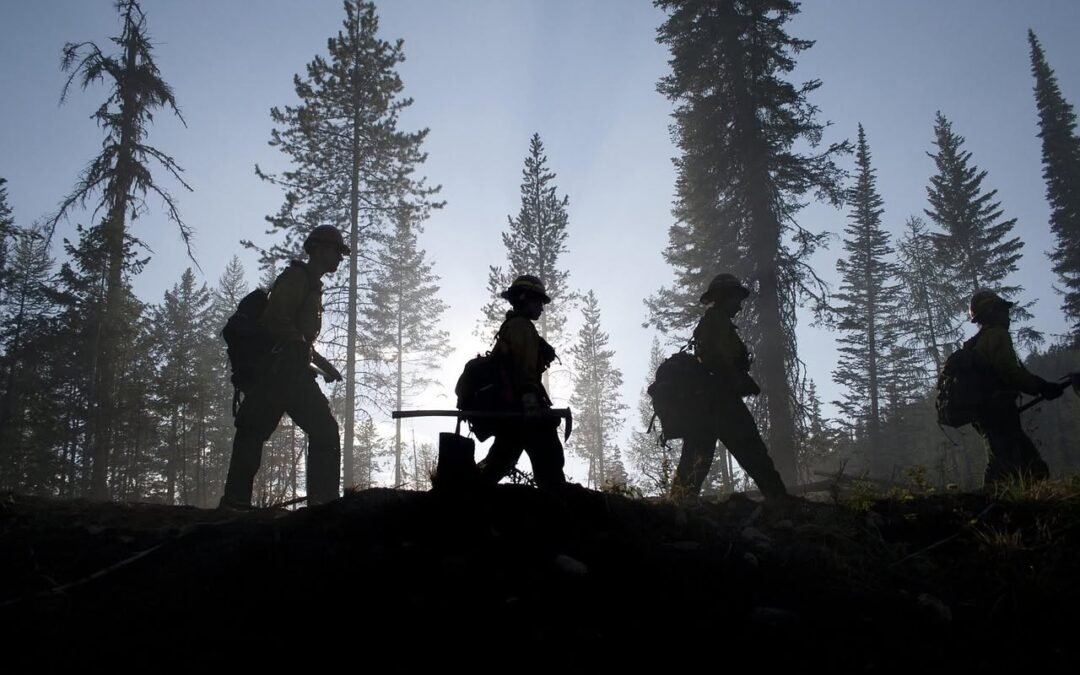
Emily Barker, 38, of Clinton Township, Michigan. Nick Hutcherson, 27, of Glendale, Arizona. Sydney Watson, 26, of Warrior, Alabama. All three were part of the Rifle Helitack crew — the men and women who get dropped into remote country by helicopter to hit a new fire before it becomes something nobody can stop. They were doing exactly that on what’s now called the Snyder Fire when a burnover caught them. Two more of their crew are recovering from injuries. All five had deployed their emergency shelters — the last resort, the thing you do when the fire has already made the decision for you.
Thirteen Years, Almost to the Day
Their deaths came almost thirteen years to the day since nineteen members of the Granite Mountain Hotshots died at Yarnell Hill, Arizona, in similarly desperate circumstances, also with shelters deployed as the last option. Investigators in that case didn’t put the blame on any one person, but they did point to radio communication breakdowns that left that crew isolated when the fire shifted. I bring that up not to draw a conclusion about the Snyder Fire — the investigation there is just getting started, and I won’t pretend to know what it will find — but as a reminder that this job has been teaching the same lessons for over a decade, and the lessons don’t stay taught unless the system keeps investing in the conditions that let people apply them.
What the Work-Rest Standard Is Actually For
If you’ve never worked a fireline, here is what you need to understand: the National Wildfire Coordinating Group didn’t write its work-rest standard — a 2:1 ratio of work to rest, a 14-day cap on assignments, two mandatory days off before you go back out — because somebody in an office thought firefighters deserved a vacation. They wrote it because fatigue kills. Not eventually. Not statistically. Directly. A tired firefighter misses the loose rock underfoot. A tired firefighter loses a half-second of control swinging a hand tool. A tired firefighter doesn’t clock the wind shift that everyone will see clearly in the after-action report, three weeks too late. The agency’s own safety literature says as much — fatigue erodes attention to the small things, and the small things are what keep you alive out there.
So Explain the Waiver to Me
This year, the Forest Service got special permission to waive the statutory cap that limits how long seasonal firefighters can stay in the rotation, letting them work well beyond the usual limit. One agency employee with twenty years in the service said he could recall that cap being lifted only a couple of times in his career — and only in the worst fire years. A veteran fire-service advocate called this year’s waiver early and unusual, and said the plainest reading of it is that the agency is admitting, out loud, that it doesn’t have the staffing depth it thought it had.
I want to be blunt about what that means operationally, because I don’t think the average American reading a press release understands it. It doesn’t necessarily mean any one shift broke the 2:1 rule on paper. It means the bench is too thin to rotate people the way the whole system assumes. The same crews get called back sooner. The recovery windows get squeezed. The margin that protocol is supposed to protect gets spent down before the season has even peaked. That’s not a technical violation. That is the exact failure mode the standard was built to prevent, arriving through the back door.
This Isn’t a Budget Line
I said this in a conversation just before I sat down to write this, and I’ll say it again here because it’s the whole point: this shouldn’t be treated as a simple financial equation. It’s a life-safety question — for the firefighters, and for the people they’re standing between and the fire. You can debate agency budgets and reorganizations and headquarters relocations all day in a policy hearing. You cannot debate away what fatigue does to a human being holding a chainsaw or a hand tool on a slope with fire moving uphill. That’s not political. That’s physiology, and it’s been documented for as long as we’ve had a wildland fire service worth the name.
What I’m Asking of You
I’m not asking you to have an opinion about a federal reorganization chart. I’m asking you to hold onto one plain fact: the people who go into the worst conditions this country produces, on our behalf, deserve a system built with enough depth that the rules protecting them don’t have to bend. When you hear the phrase “hiring goal met,” ask what the goal was measured against — the job, or the budget. When you hear “fully staffed,” ask who’s still working their third assignment without the days off the standard requires. That’s not disrespecting the people running these agencies. That’s holding the line for the people running into the fire.
Closing
To the families of Emily Barker, Nick Hutcherson, and Sydney Watson — I’m sorry. I know “sorry” doesn’t carry the weight it needs to. I never met this crew, but I’ve stood in formations with people just like them. They did the job until the job took everything they had. The least the rest of us can do is make sure the system around them was built to give them a fighting chance, and demand better when it wasn’t.
If you’re able, the Wildland Firefighter Foundation supports the families of fallen wildland firefighters, and a verified fund has also been established for Nick Hutcherson’s family. Look up any fund before you give, always — but don’t let this week pass without doing something.
Stay safe out there. Watch each other’s backs. Take your days off.
— Chief Fred R. LaPoint
Sourced from reporting and public data from the U.S. Department of the Interior, the U.S. Forest Service, ProPublica, Government Executive, Colorado Public Radio (CPR News), CBS Colorado, AZFamily/AP, PBS NewsHour, and the National Wildfire Coordinating Group. Current as of July 1, 2026.
This article first appeared in Behind The Alarm, the newsletter of Fred R. LaPoint, Fire Chief Paramedic of the Stronach Township Fire Department, on July 1, 2026. Read the original.