Yesterday, our fire department assisted a neighboring agency on a tragic crash on M‑55 in Manistee County, MI. Snow was blowing sideways, visibility was collapsing, and traffic had to be rerouted around the scene. While standing in that intersection, watching vehicle after vehicle approach us, one thing became impossible to ignore.
Roughly one out of every six drivers was operating in near white‑out conditions with no headlights or taillights, or marker lights.
Not because they’re reckless.
Not because they don’t care.
But because they trusted the “AUTO” setting on their headlight switch.
Here’s the truth most people don’t know:
AUTO mode only reacts to darkness — not visibility.
So in daytime snow, fog, or bright overcast conditions, the sensor thinks everything is fine. It activates daytime running lights only. That means:
• No taillights
• No side markers
• Dim forward lighting
• A vehicle that blends into the storm
From behind, these cars are nearly invisible. On an accident scene, that’s not just a hazard — it’s a threat to responders, victims, and every driver on that road.
What drivers should do
The rule is simple and universal:
If you need your wipers, you need your headlights ON — manually.
Not AUTO.
Not DRL.
ON.
This ensures full lighting front and rear, and it gives everyone around you the visibility they need to avoid becoming the next emergency.
A practical winter hack
If you struggle to remember, cover your vehicle’s light sensor during winter. It forces the system to run full lighting automatically. Remove it in spring.
The bigger picture
Manufacturers could solve this tomorrow by programming headlights and taillights to activate whenever the vehicle is in gear. Canada already requires full‑lighting DRLs. The U.S. does not.
Until that changes, education is our only tool.
Share this. Teach this. Visibility saves lives.
If you learned something from this, pass it on to family, friends, local media outlets, social media. Someone you love is out there driving in the same storms.
IF YOU STRUGGLE TO REMEMBER TO SWITCH YOUR LIGHTS – DRIVING TIP TO HELP: HOW TO COVER YOUR LIGHT SENSOR (WITHOUT DAMAGING ANYTHING)
Why This Matters
In snow, fog, and white‑out conditions, your vehicle’s AUTO setting may not turn on your full headlights or taillights. That leaves you nearly invisible to other drivers — and to emergency responders working scenes like the recent fatal crash on M‑55.
Covering the light sensor during winter forces your vehicle to run full lighting automatically.
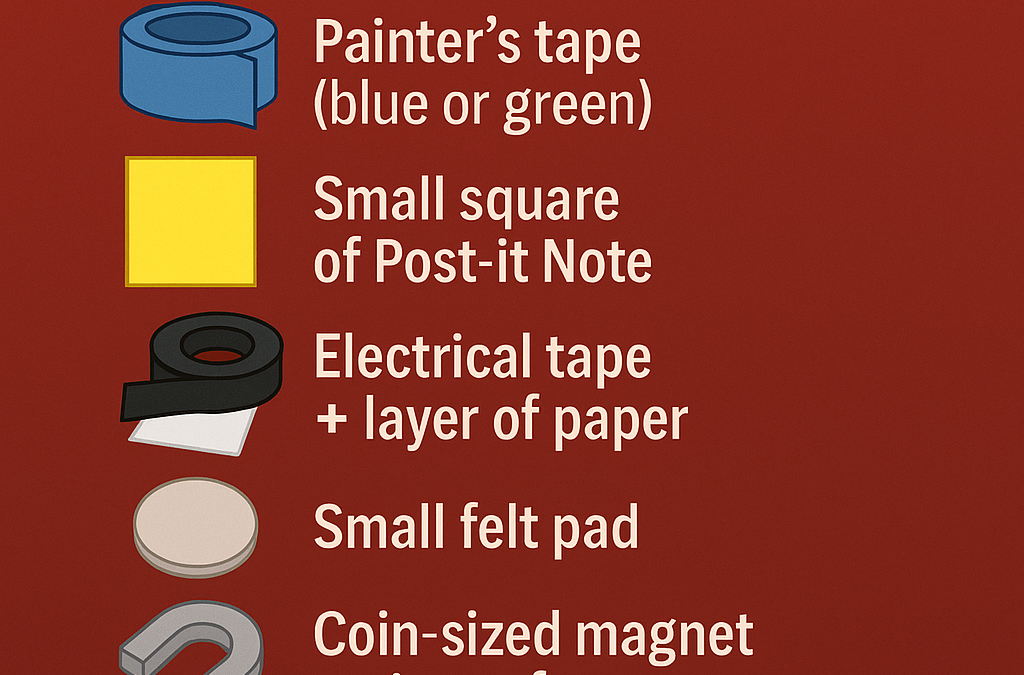
****Safe, Clean Ways to Cover a Light Sensor****
These options block light without leaving residue or damaging the dash:
1. Painter’s Tape (Blue or Green)
• Designed to remove cleanly
• Sticks well in cold weather
• Best all‑around option
2. Small Square of Post‑It Note
• Gentle adhesive
• Works well on flat sensors
• Zero residue
3. Electrical Tape + a Layer of Paper
• Paper blocks the light
• Tape holds it in place
• No adhesive touches the sensor
4. Small Felt Pad
• Soft and opaque
• Removes cleanly
• Great for recessed sensors
5. Coin‑Sized Magnet + Paper (If Surrounding Trim Is Metal)
• No adhesive at all
• Paper blocks the sensor
• Magnet holds it securely
6. Rubber Furniture Bumper
• Light tack
• Blocks light completely
• Peels off cleanly
7. Reusable Silicone Putty Dot
• Non‑adhesive
• Doesn’t melt or smear
• Conforms to odd shapes
What NOT to Use
Avoid anything with strong adhesive:
• Duct tape
• Gorilla tape
• Packing tape
• Cheap rubber or waxy materials
These can leave residue or damage the dash.
The Rule That Saves Lives
If you need your wipers, you need your headlights ON — manually.
AUTO mode is not enough in winter conditions.
This article first appeared in Behind The Alarm, the newsletter of Fred R. LaPoint, Fire Chief Paramedic of the Stronach Township Fire Department, on January 28, 2026. Read the original.