
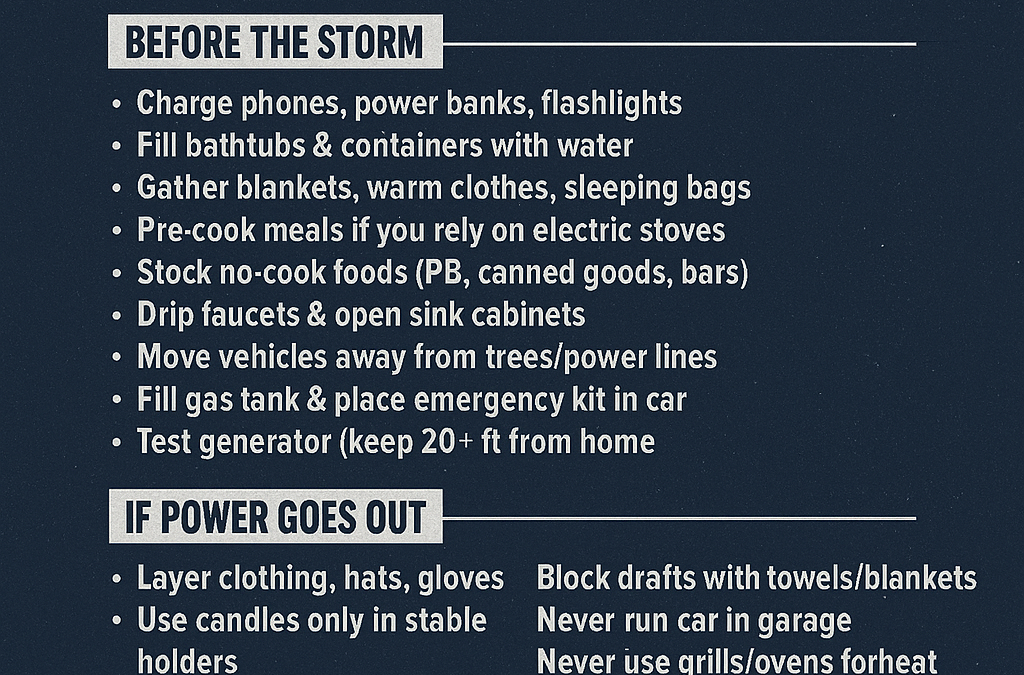
The southern United States is staring down a dangerous ice storm with the potential to knock out power for days, cripple travel, and expose millions to life‑threatening cold. Most people in this region aren’t built—or equipped—for prolonged freezing rain and grid failure. This guide cuts through the noise and gives you the clear, practical steps you need to stay safe, whether you’re preparing ahead of time or already in the middle of the storm.
THE SOUTHERN ICE STORM SURVIVAL GUIDE
A Fire Chief’s Field Manual for Staying Alive, Warm, and Oriented When the Grid Goes Down
1. WHAT TO DO RIGHT NOW (BEFORE THE STORM HITS)
A. Secure Heat, Power, and Light
-
Charge all devices, battery banks, flashlights, headlamps.
-
Fill bathtubs and containers with water (pipes may freeze even in the South).
-
Gather all blankets, sleeping bags, and winter clothing in one accessible location.
-
If you have a generator:
-
Test it today.
-
Ensure you have fresh fuel stored outside the home in approved containers.
-
Position the generator at least 20 feet from doors/windows.
-
B. Food & Water Prep
-
Stock 3–5 days minimum of no-cook foods: peanut butter, canned goods, protein bars, crackers, nuts.
-
Fill every available bottle with drinking water.
-
If you rely on electric stoves, pre-cook meals now.
C. Home Hardening
-
Bring in outdoor furniture, grills, and anything that can become airborne or freeze to the ground.
-
Open cabinets under sinks to allow warm air to reach pipes.
-
Drip faucets to reduce freezing risk.
-
Know how to manually open your garage door.
D. Transportation & Vehicle Prep
-
Fill your gas tank—fuel stations may lose power.
-
Move vehicles away from trees and power lines.
-
Place an emergency kit inside: blankets, water, snacks, phone charger, shovel, sand/kitty litter.
2. WHAT TO DO WHEN THE STORM ARRIVES
A. If the Power Goes Out
-
Stay inside. Ice storms are silent killers—falling branches, power lines, and black ice make outdoor movement extremely dangerous.
-
Consolidate everyone into one room and close it off to retain heat.
-
Use layers, hats, gloves, and blankets to maintain body temperature.
-
Keep refrigerators/freezers closed—food can last 24–48 hours if unopened.
B. Heating Safety
Never use:
-
Grills indoors
-
Ovens for heat
-
Generators in garages, porches, or near windows
-
Propane heaters not rated for indoor use
Carbon monoxide is the #1 killer in winter outages.
If you feel dizzy, nauseated, or confused, get outside immediately.
C. Water & Sanitation
-
Use stored water first.
-
If pipes freeze, shut off the main water valve to prevent bursting.
-
Melt snow for flushing—not drinking—unless boiled.
D. Communication
-
Conserve phone battery:
-
Turn on low-power mode
-
Dim screen
-
Close background apps
-
-
Text instead of calling—uses less power and bandwidth.
3. WHAT TO DO IF YOU’RE CAUGHT UNPREPARED (STORM ALREADY UNDERWAY)
A. Prioritize Heat & Safety
-
Put on every layer you have.
-
Move to an interior room or closet with the least exterior wall exposure.
-
Use blankets, towels, or clothing to block drafts around doors/windows.
B. Improvise Heat Safely
-
Body heat is your most reliable source—stay together.
-
Use candles only in stable holders and never leave them unattended.
-
Use your car only if it is fully cleared of snow/ice and the exhaust pipe is unobstructed.
-
Run it for 10 minutes every hour for heat.
-
Crack a window for ventilation.
-
C. If You Must Go Outside
-
Assume every downed line is live.
-
Walk like a penguin—short steps, weight forward.
-
Avoid trees; ice-laden branches can fall without warning.
4. WHAT TO DO AFTER THE STORM PASSES
A. Re-Entering the Cold House
-
Turn heating systems back on slowly.
-
Check for burst pipes before restoring water pressure.
-
Discard any food that smells off or sat above 40°F for more than 2 hours.
B. Generator Safety Continues
-
Keep generators outside until the grid is fully stable.
-
Never refuel while running.
C. Clearing Ice & Debris
-
Wear a helmet or hard hat if working under trees.
-
Use extreme caution with chainsaws—ice makes kickback more likely.
-
Photograph damage for insurance before cleanup.
5. WHAT NOT TO DO—THE LIFE-SAVING LIST
-
Do not drive unless it is a medical emergency.
-
Do not walk under ice-covered trees.
-
Do not use outdoor heaters, grills, or generators indoors.
-
Do not run your car in a garage, even with the door open.
-
Do not assume the power will return quickly—prepare for days.
-
Do not leave candles burning while you sleep.
-
Do not touch downed power lines or anything touching them.
6. LONG-TERM RESILIENCE: WHAT TO DO GOING FORWARD
A. Build a Winter Outage Kit
-
Battery-powered lanterns
-
NOAA weather radio
-
Water filter
-
7-day supply of shelf-stable food
-
Extra medications
-
Backup heat source rated for indoor use
-
Multiple power banks
B. Home Upgrades
-
Insulate pipes, attics, and crawl spaces.
-
Install carbon monoxide detectors with battery backup.
-
Add storm-rated window coverings.
-
Consider whole-home surge protection.
C. Community Preparedness
-
Check on elderly neighbors and those with medical needs.
-
Establish a family communication plan.
-
Identify warming centers in your area.
7. CLOSING MESSAGE FOR YOUR READERS
This storm is not “just another winter event.” It has the potential to cripple infrastructure across the South, where ice storms are rare and power grids are vulnerable. Forecasters warn of long-duration outages, dangerous cold, and travel paralysis across more than 35 states.
You, my reader’s need to hear this plainly:
Preparation is not panic. Preparation is survival.
And even if you’re already in the thick of it, the right actions taken calmly can save lives.
This article first appeared in Behind The Alarm, the newsletter of Fred R. LaPoint, Fire Chief Paramedic of the Stronach Township Fire Department, on January 22, 2026. Read the original.