Saturday, I stood in full turnout gear, watching smoke pour from the second-story windows of a donated home in Mason County. My pulse quickened—not from fear, but from anticipation. After more than 40 years in the fire service, I was about to step into something that never gets routine: a live fire training evolution.
Let me tell you why that matters.
The Rarest Opportunity in Firefighting
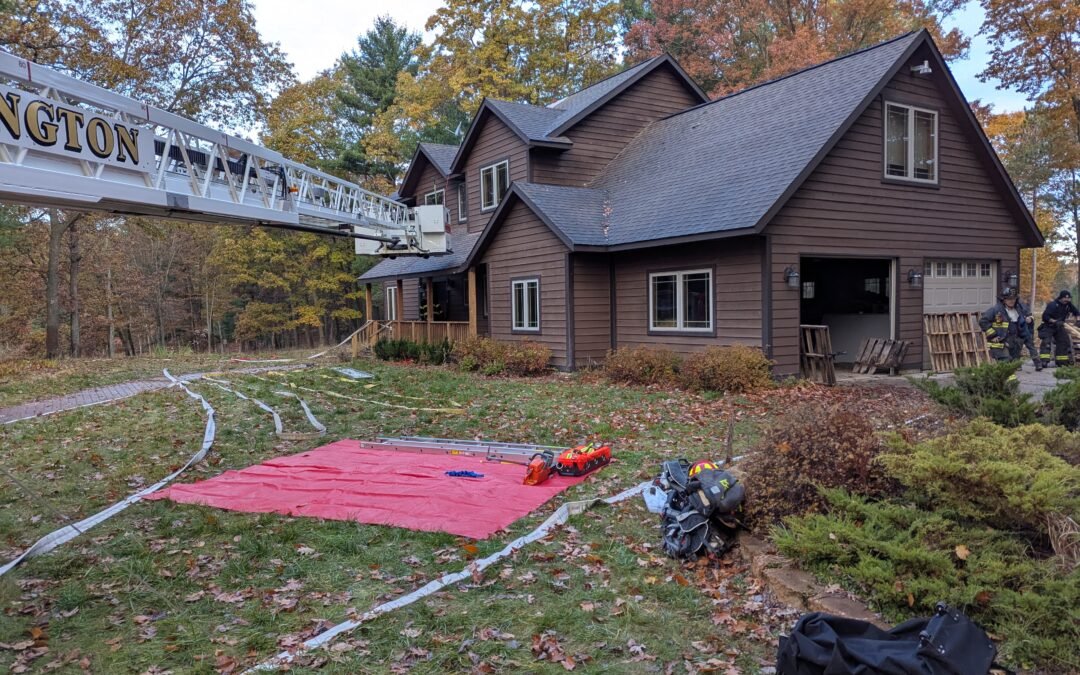
The image above is the donated structure before commencing interior operations. It features a large open floor plan on the first floor, large open stairways between floors, and an important note is that all furnishings, cabinetry, etc, had been removed prior to utilizing the building for training. There is a six-minute 12-second video at the end of this article that you need to watch to see just how quickly fires like these can spread and how little time is available to escape. Anything you can do to increase the odds of survival makes a huge difference.
Live fire training in an actual structure is the unicorn of our profession. These opportunities are as rare as they are valuable, and Saturday’s training was no exception. It took over two months of painstaking preparation to make it happen—site plans, architectural drawings, permits, detailed safety protocols, contingency plans, and coordination with multiple agencies. They had to jump through every regulatory hoop imaginable, and for good reason.
When you’re deliberately setting fires and sending firefighters into burning buildings—even for training—the margin for error is razor-thin.
But here’s the truth that every firefighter knows and that every citizen should understand: there is no substitute for the real thing.
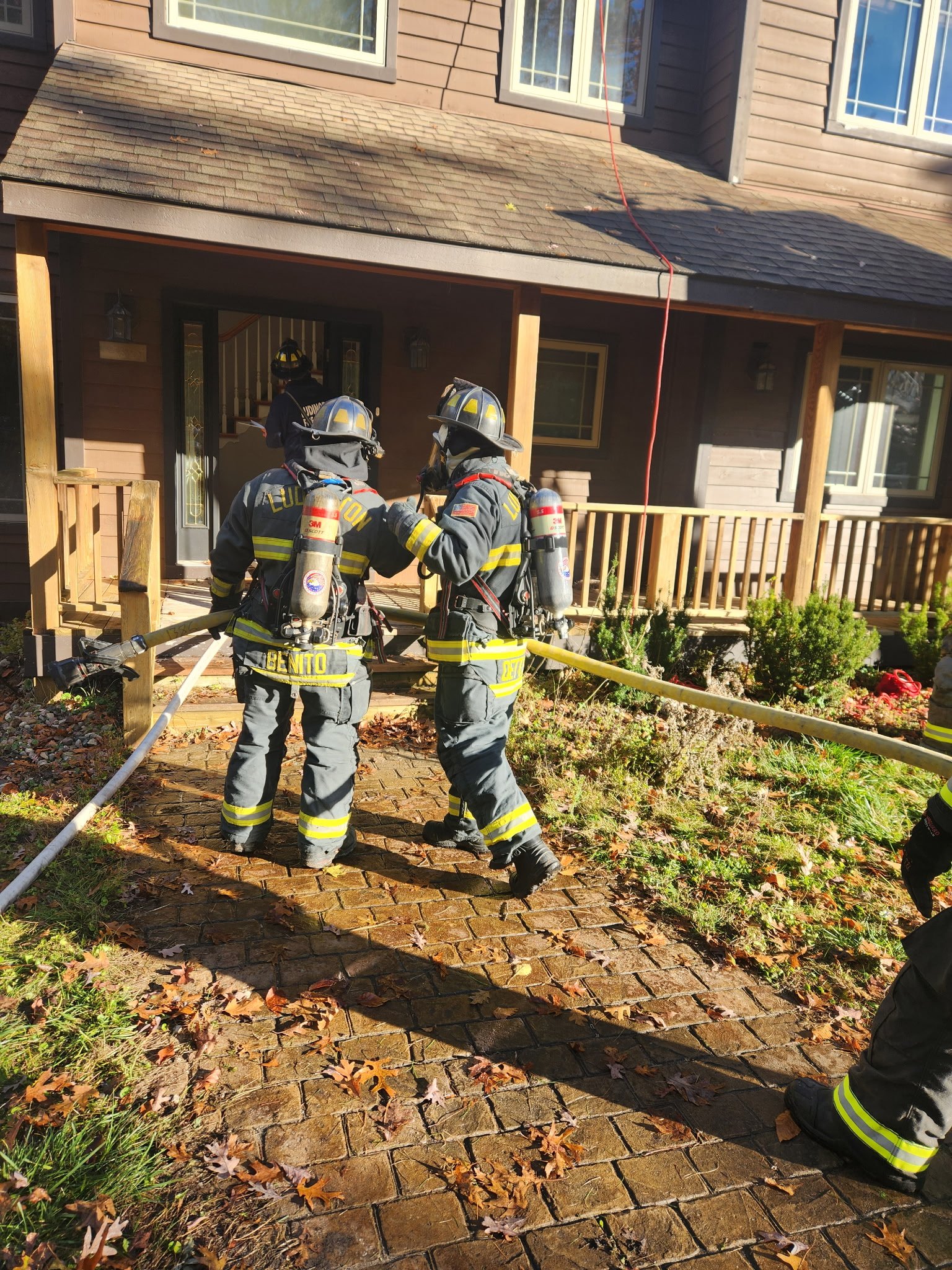
You can drill on technique. You can memorize procedures. You can run scenarios until you can do them in your sleep. But until you advance a charged hoseline up a smoke-filled stairwell with zero visibility, with 1,200 degrees of heat pressing down on you, with your heart hammering in your chest and your SCBA alarm screaming in your ears—you don’t really know what firefighting is.
Yesterday’s training brought together departments from across the region: Mason County Rural Fire Authority, Grant Township, Free Soil & Meade, Custer, Riverton, Ludington, Pere Marquette, Hamlin, Filer Township from Manistee County, and my own Stronach Township Fire Department. Life EMS provided medical standby and rehab. The Mason County Sheriff’s Department assisted. The house was donated by Emily and Kevin Kelly, and we owe them tremendous gratitude.
It took a village to make this happen, and that village showed up.
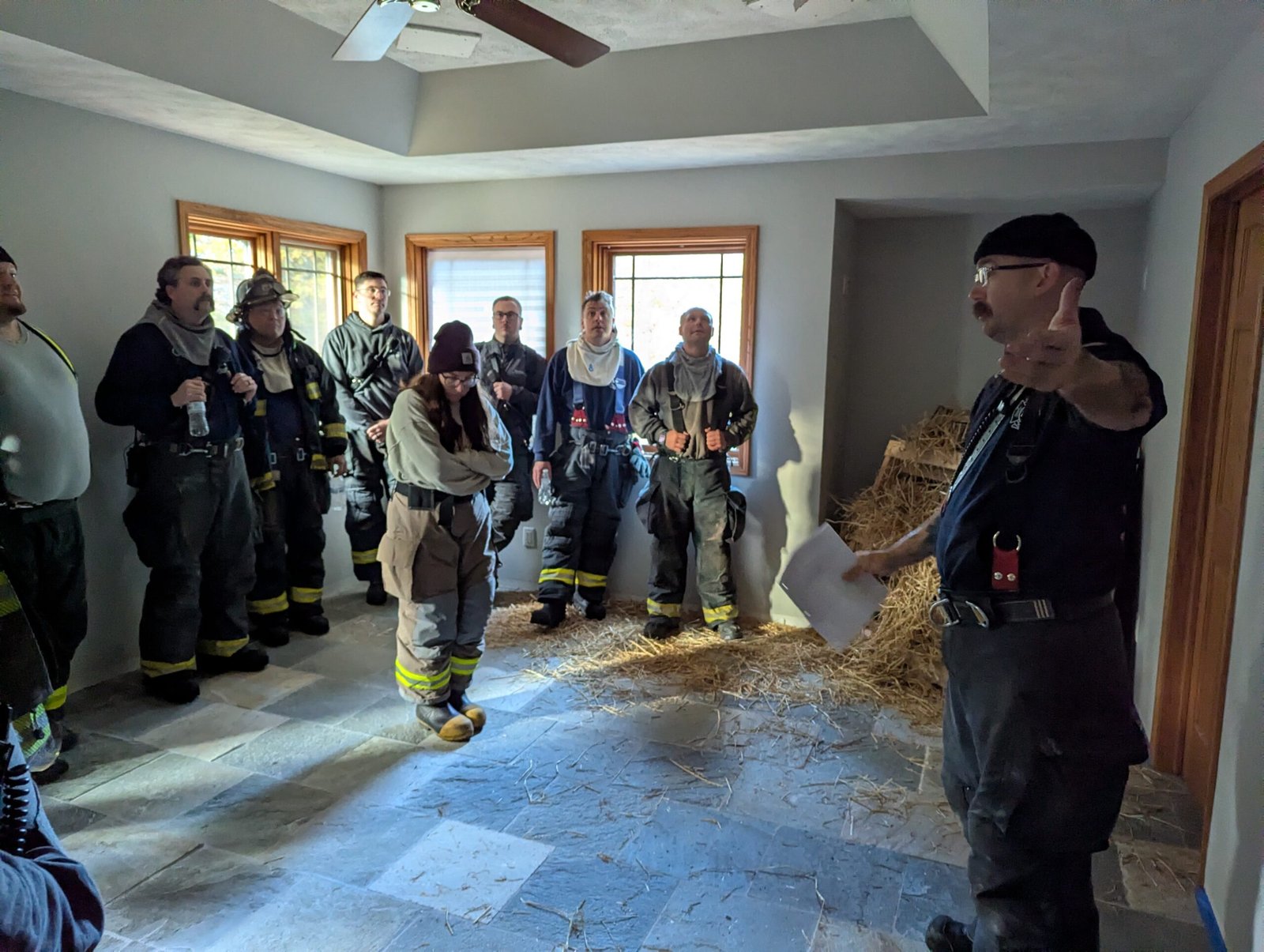
This is Captain Christopher Jeffries going into the pre-exercise safety brief and walk-through of the structure prior to the live fire training commencing. The little bit of straw and single pallet in the corner of the room behind him is capable of generating temperatures of over 1000 degrees at the ceiling if allowed to burn unchecked, and that is just natural materials. Now add sythentics and foam and other furnishings found in a typical home, and temperatures in these spaces can soar to above 2000 degrees F and fill the space with a toxic soup of chemical smoke that is highly flammable and, under the right conditions, extremely explosive.
The Sensory Assault You Can’t Simulate
I want to talk to the rookies for a moment—those of you considering the fire service or those brand new to it. I also want the citizens reading this to understand what your local firefighters train for and why.
When you enter a structure fire for the first time, your body experiences something close to sensory overload. The heat isn’t just uncomfortable—it’s a dominating physical force pressing against you. The smoke isn’t just something you can’t see through—it’s disorienting, claustrophobic, and utterly alien. The sounds—the roar of fire, the hiss of steam, the crack of failing structure, the chaotic radio traffic—all compete for your attention when you need focus most.
And then there are the tasks themselves. Advancing a charged hose line around corners, through doorways, up staircases—it’s physically demanding in ways that don’t become clear until you’re doing it with a timer counting down and conditions deteriorating around you. In a real emergency, you might have victims trapped somewhere in that hell. You might have seconds, not minutes.
The fear? It’s real. Anyone who tells you they don’t feel it is either lying or foolish. But here’s what matters: fear isn’t the enemy. Unpreparedness is.
With proper training, you learn to harness that fear. You learn to respect the fire, respect the environment, and use that heightened awareness constructively. The fear keeps you sharp. The training keeps you effective.
Why Modern Fires Are More Dangerous Than Ever
Here’s something that might surprise you: your grandfather’s house fire is not your house fire.
The phrase “they don’t build them like they used to” is perhaps the greatest understatement in the fire service. And while modern construction techniques offer benefits to homeowners—more space, better energy efficiency, lower costs—they’ve fundamentally changed how buildings behave when they burn.
The Speed of Death
In a home built 50 years ago, you might have had 15 to 20 minutes from ignition to flashover—that critical moment when everything in a room simultaneously ignites. Today? You might have 3 to 5 minutes.
Why? Synthetic materials.
Your grandfather’s living room had a cotton couch, solid wood furniture, and wool drapes. Today’s home is filled with petroleum-based synthetics—polyurethane foam, plastic electronics, synthetic upholstery. These materials don’t just burn faster; they burn hotter and release massive amounts of toxic smoke. We’re talking temperatures exceeding 2,000 degrees Fahrenheit in minutes.
The BTU output is exponentially higher. The time we have to rescue victims has been cut by two-thirds. The margin for error has evaporated.
When the Floor Becomes a Trap
Modern construction relies heavily on engineered wood products—I-joists, parallel chord trusses, oriented strand board. These are lightweight, cost-effective, and meet building codes. They’re also held together with glues and fasteners that fail rapidly under fire conditions.
Traditional solid-sawn lumber could burn for 20 minutes and still support our weight. Modern engineered components? They can fail in 5 to 8 minutes.
Worse, they fail suddenly and catastrophically. Traditional lumber might sag or show warning signs. Lightweight construction gives almost no warning before complete collapse over large areas. You’re walking across a floor, and then you’re not. You’re beneath it, trapped, with fire above you.
This is why nine firefighters died in Charleston in 2007. This is why we’ve lost brothers and sisters across the country. The game has changed, and if we don’t adapt, we don’t survive.
The Ventilation Paradox
Modern homes are built tight for energy efficiency. That’s great for your heating bill. It’s terrible for fire dynamics.
These airtight homes create ventilation-limited fires—fires that are starved for oxygen. When we breach a door or window, we’re not just opening an entry point. We’re introducing a massive oxygen source to a superheated, fuel-rich environment. The result can be explosive.
Backdrafts aren’t theoretical anymore. They’re a realistic threat every time we force entry into a modern structure.
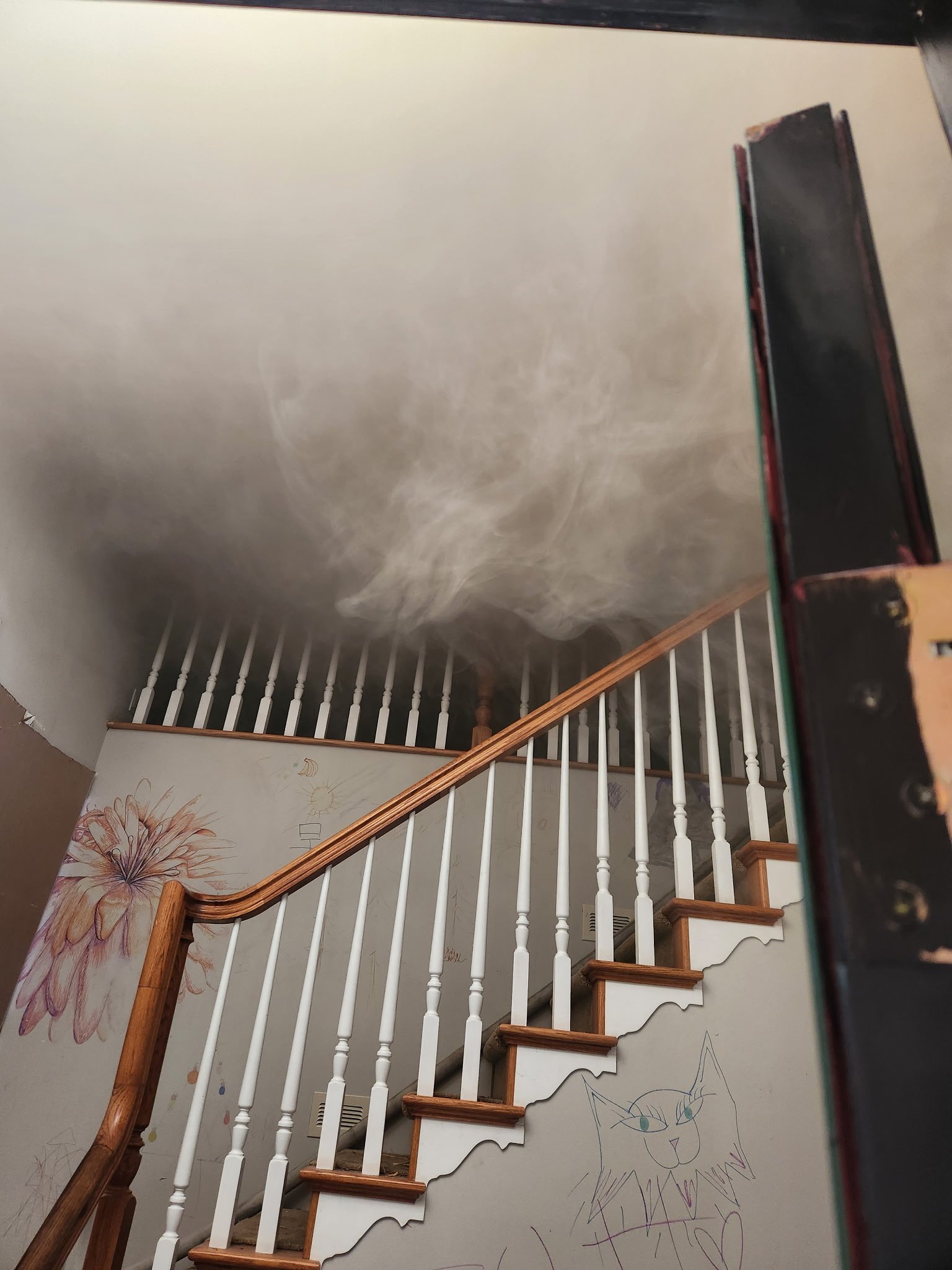
Add open floor plans—those beautiful great rooms and open-concept designs—and you have a recipe for rapid fire spread throughout the entire first floor with nothing to slow it down. No walls, no doors, no compartmentalization. Just heat, smoke, and fire running freely through the space.
Why We Train When Buildings Don’t Want to Teach
Given everything I’ve just described, live fire training isn’t just beneficial—it’s essential.
Firefighters need to experience:
-
The physics of heat and smoke in real conditions, not simulations
-
The disorientation of zero-visibility navigation
-
The physical demands of firefighting operations under stress
-
The critical importance of crew integrity and accountability
-
The reality of how quickly conditions can deteriorate
-
The sound of a structure beginning to fail
-
The decision-making pressure when lives are on the line
For officers, the benefits are even more pronounced. They need to practice incident command under realistic conditions. They need to make rapid tactical decisions with incomplete information. They need to coordinate multiple crews, manage resources, and maintain situational awareness while conditions change by the second.
Key Benefits for Firefighters
-
Real-world experience and skill development: Firefighters get hands-on practice with essential skills, such as hose line advancement, nozzle techniques, and operating a self-contained breathing apparatus (SCBA) under the physical and mental stress of actual heat, smoke, and low visibility.
-
Understanding fire dynamics: Trainees can directly observe how fire grows, spreads, and reacts to ventilation and water application in various environments (e.g., attics, basements, multi-room structures), which enhances their situational awareness.
-
Building confidence and composure: Experiencing the high-pressure, chaotic conditions of a live fire in a safe setting helps build confidence in their abilities and reduces the likelihood of panic during real incidents.
-
Reinforcing safety protocols: The hands-on nature of the training reinforces the importance of safety measures, the proper use of personal protective equipment (PPE), and adherence to established procedures like the “two-in/two-out” rule.
-
Developing muscle memory: Repetitive practice of critical tasks under pressure builds the muscle memory needed to act swiftly and efficiently without hesitation during an emergency.
Key Benefits for Fire Officers
-
Enhanced decision-making under pressure: Live fire scenarios force officers to make rapid, informed tactical and strategic decisions, such as resource allocation, risk assessment, and command strategies, which are crucial for effective incident management.
-
Improving command and coordination skills: Officers can practice using the Incident Command System (ICS) and coordinating efforts between different teams (e.g., engine and ladder crews) in a dynamic environment, which is vital for seamless operations on the fire ground.
-
Evaluating personnel and tactics: Training officers can observe their team members’ individual skill levels, identify weaknesses in operational plans, and assess how well a team works together, allowing for targeted future training and improvement.
-
Leadership development: Live fire simulations expose aspiring officers to the challenges of leadership in high-stakes situations, helping them to develop problem-solving skills, adaptability, and the ability to lead effectively when it counts most.
-
Risk management and safety culture: By emphasizing safety standards (like NFPA 1403) and protocols during high-risk drills, fire officers can instill a strong culture of safety and accountability throughout the department.
You can’t learn that from an AI or PowerPoint presentation.
The Preparation Behind the Fire
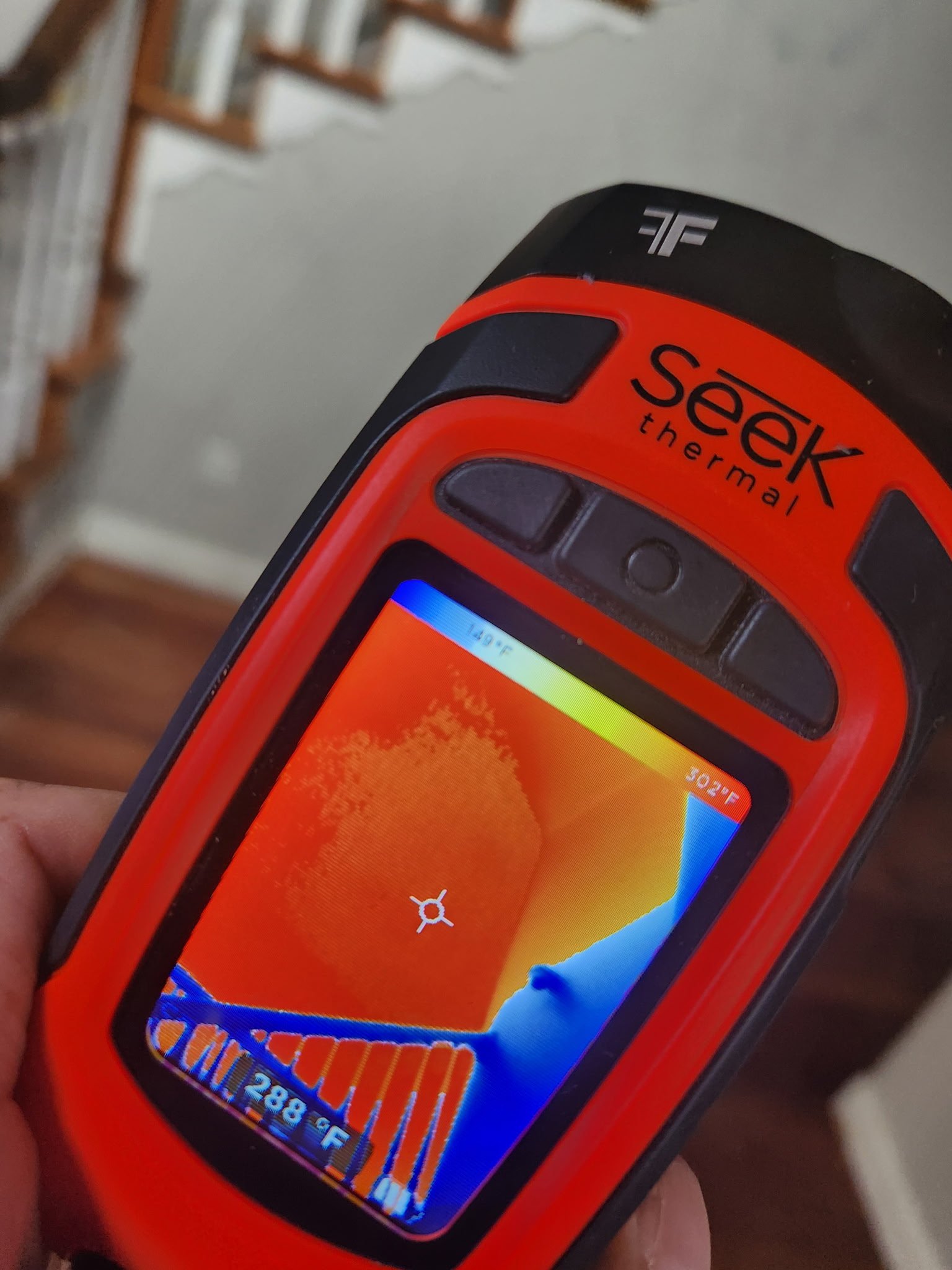
Yesterday’s training was the culmination of months of work by people who deserve far more recognition than they’ll ever receive. Every detail mattered. Every contingency was planned. The safety protocols were exhaustive because they had to be.
The instructors met strict certification requirements. The participating firefighters represented varying experience levels, ensuring both veterans and rookies could benefit. Medical evaluation and rehab were on-site because we train like we fight—with safety systems in place.
The devil wasn’t just in the details. The devil was the details.
But that’s what separates professional fire service from playing with fire. We respect the hazard. We plan accordingly. We execute with discipline. And we learn—individually and collectively—from every evolution.
The People Who Made Excellence Possible
Training of this caliber doesn’t happen by accident. It requires experienced instructors who understand not just fire behavior, but how to teach in high-risk environments while maintaining safety as the paramount concern. Yesterday’s success was built on the expertise and dedication of professionals who volunteered their time and knowledge.
Incident Command was led by Ludington Fire Chief John Henderson (Fire Instructor Level 2), who oversaw the entire operation with the precision and coordination that live fire evolutions demand.
The Instructor-in-Charge was Senior Firefighter Will Hagerty of the Ludington Fire Department (Fire Instructor Level 3), who orchestrated every evolution, managed the complex logistics, and ensured every participant had the opportunity to learn in a controlled, safe environment.
Supporting the training were Fire Instructor Level 2 certified instructors: Chris Jeffries (Firefighter, Ludington Fire Department and Captain, City of Manistee Fire Department) and Lt. Bob Slawinski (Grant Township Fire Department), whose experience and teaching ability helped guide crews through complex scenarios.
Special recognition must be given to Senior Firefighter Brandon Coughlan, Secretary of the Ludington Fire Department, whose behind-the-scenes work was absolutely essential to this training’s success. Brandon served as the operation’s facilitator and problem-solver—the person who ensured that nothing fell through the cracks. He shepherded the complex EGLE permit process, coordinated all the food and logistics, maintained communication with the homeowners, and arranged for the Mason County Fire Academy to conduct preliminary training at the location the week prior to our live fire evolutions. He acted as a sounding board for instructors and participants alike, anticipating needs before they became problems and handling the thousand small details that separate a good training from an exceptional one. In any major operation, there’s always someone working tirelessly in the background making sure everything comes together seamlessly. Brandon Coughlan was that person. Without his dedication and organizational skills, this training simply would not have been the success it was.
Lt. Gary Walton of the Ludington Fire Department managed staging and accountability—a critical role that ensures we know where every firefighter is at all times, maintaining the crew integrity that can mean the difference between life and death on the fireground.
Fire Instructor Level 1 certified instructors included Jon Morrill and Todd VanNortwick (Riverton Fire Department), Tyler Hillier, Pere Marquette Fire Department, and from the Ludington Fire Department: Ryan Leet is with the Ludington and Pere Marquette Fire Departments, Tyler Haner, and Brandon Coughlan from the Ludington Fire Department. These instructors worked directly with participants, providing real-time feedback, demonstrating techniques, and ensuring safety protocols were followed at every stage.
The participating departments—Grant Township, Free Soil & Meade Fire, Ludington Fire Department, Hamlin Township, Custer, Filer Township Fire Department, and Stronach Township Fire Department—brought personnel eager to learn and improve. That commitment to continuous education is what keeps our communities safe.
This level of coordination and expertise doesn’t materialize overnight. It’s the product of professionals who take their craft seriously and understand that teaching the next generation of firefighters is as important as fighting fires themselves.
What Citizens Need to Know
To the residents of our communities: when you see us training, understand that we’re not playing. We’re preparing to enter the worst day of your life with the skills and confidence to make it better.
That requires funding for training facilities, equipment, and personnel. It requires understanding when we need to close roads for drills or when you hear sirens during training exercises. It requires supporting mutual aid agreements between departments because modern fire conditions demand more resources, faster than ever before.
The fire service has evolved. The hazards have multiplied. The timeline has compressed. We’re adapting because we have no choice.
The Message to My Brothers and Sisters
To my fellow firefighters, especially those new to the service:
Embrace every training opportunity like it’s the most important thing you’ll do that week—because it might be. The confidence you build in controlled conditions will save your life, or someone else’s, when conditions aren’t controlled.
Respect the modern fire environment. The old rules don’t always apply. That sixth sense our predecessors (and even I) relied on—feeling a floor start to sag, seeing the signs of impending flashover—those indicators are less reliable with modern construction. We have to be smarter, faster, and more strategic.
Study your district. Know your buildings. Understand what you’re walking into before the alarm sounds. Know where the lightweight construction is. Know the open floor plans. Know the hazards.
And never, ever become complacent. The moment you think you’ve seen it all is the moment the job reminds you how little you actually control.
The Unforgiving Truth
Modern firefighting is more dangerous than it’s ever been, and the window for successful operations is narrower than ever. We need:
-
Faster response times because we’re losing the luxury of a delayed arrival
-
Better training because the complexity has increased exponentially
-
Improved tactics because the traditional playbook has holes in it
-
Stronger situational awareness because the warning signs have changed
-
Greater coordination because no single department has all the resources needed
-
Support from local leaders and citizens to help us help you
Most importantly, we need the mindset that education never ends. Technology evolves. Construction methods change. Fire behavior adapts. We must adapt faster.
The Gift of Yesterday
Saturday’s live fire training was a gift to every firefighter who participated, to every department that was represented, and ultimately to every citizen we serve. We became better. We became safer. We became more prepared.
These opportunities are rare because they’re difficult to arrange, expensive to coordinate, and carry inherent risks. But they’re invaluable because they create muscle memory that activates in crisis. They build confidence that holds up under pressure. They forge crews into teams.
I’ve been doing this for more than four decades. I’ve seen the fire service change in ways I couldn’t have imagined when I started. I’ve watched friends buried. I’ve seen departments evolve. I’ve experienced the pride of bringing everyone home and the guilt when we couldn’t.
Through it all, one truth remains constant: we rise to the level of our training. When conditions go sideways—and they will—we don’t rise to the occasion. We fall back on what we’ve practiced.
Saturday, we practiced under real conditions. Today, we’re better prepared for what tomorrow might bring. That’s not just training.
That’s survival.
A Final Word
To Kevin and Emily Kelly, who donated their home for this training: thank you. Your generosity created a classroom where skills were honed and lives were protected—not just the lives of the firefighters who trained there, but the lives of every person in every building those firefighters will enter in the future. Your contribution to our community’s safety cannot be overstated.
To Chief Henderson, Will Hagerty, and all the certified instructors who gave their time and expertise: your professionalism made excellence possible. You didn’t just teach techniques—you instilled confidence, reinforced safety culture, and demonstrated what it means to be a professional in this service.
To the participating departments, Life EMS, and the Mason County Sheriff’s Department: this kind of coordinated training strengthens all of us and reminds us why mutual aid isn’t just policy—it’s survival.
And to the rookies who experienced their first live fire: remember that feeling. Remember the heat, the smoke, the fear, and the moment you pushed through it. Remember that you’re part of something bigger than yourself—a tradition of service that demands your best because people’s lives depend on it.
Welcome to the fire service. Train hard. Stay humble. Go home safe.
The Reality of Modern Fire Behavior: 6 Minutes, 12 Seconds
🎥 Watch our live fire training evolution from November 1st—muted sections are for safety/privacy.
The video shows the final training burn of the donated structure. The fire was ignited in the basement’s northwest corner. No accelerants were used—only natural airflow and open doors and windows allowed the fire to spread.
Watch as fire travels from the basement to the first floor, through open hallways, up stairways to the second floor, and spreads throughout the structure. Total time from ignition to fully involved: 6 minutes, 12 seconds.
This is the reality firefighters face in modern construction with open floor plans and lightweight materials. This is why every second counts.
Chief Fred R. LaPoint has served in the fire service for over 40 years and currently serves as Fire Chief of Stronach Township Fire Department. He is also a U.S. Coast Guard veteran and Disaster Responder with Team Rubicon, with over three dozen deployments to disasters here in the U.S. and worldwide.
Behind The Alarm is a publication dedicated to sharing the realities, challenges, and triumphs of the fire service with both firefighters and the communities they serve.
This article first appeared in Behind The Alarm, the newsletter of Fred R. LaPoint, Fire Chief Paramedic of the Stronach Township Fire Department, on November 3, 2025. Read the original.